What's Actually Changing in AI Go-to-Market (And What Isn't)
Our CEO Jay Hallberg joined a panel at the HSE Agentic Singularity Summit with go-to-market leaders from Metadata.io, Common Room, Mural, StoryPath, and Buyer Foresight. The conversation cut through the hype and landed on what's working, what's failing, and what will still matter in 2026
Here's what stood out.
Buyers Changed Faster Than the Tech Did

The panel agreed: the biggest shift wasn't internal AI adoption. Buyer behavior moved faster than anyone predicted.
Lisa Sharapata , VP of AI & GTM Strategy at Metadata.io put it bluntly: By the time someone hits your website, they've already done their research. They've queried an LLM. They've formed opinions. They arrive later-stage than they used to, which breaks your retargeting strategy and invalidates most top-of-funnel assumptions.
Leigh-Margaret Stull, CEO at Mural added that buyers no longer tolerate pitching or demoing. They can do that themselves. They expect reps to show up prepared, ask strategic questions, and co-create solutions. The bar for human interaction rose while most sales teams stayed flat.
While Doug Landis, CRO at StoryPath cited a Gartner stat: 82% of reps still show up to conversations unprepared. That gap between buyer expectations and rep readiness is widening.
95% of AI Projects Fail. The 5% Share One Thing.
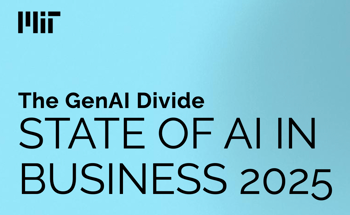
According to a now infamous MIT study, 95% of AI projects fail. The finding that surprised the panelists wasn't the failure rate. It was what separated the 5% that succeeded.
The answer: human alignment across entire workflows.
Most teams grabbed pieces of their workflow and bolted AI onto them. A tool here, an agent there. No coordination. No rethinking of the underlying process. The result was what Leigh-Margaret called "a hot mess." Promises of saved time and improved outcomes collapsed under fragmented execution.The 5% that succeeded didn't plug AI into existing workflows. They reimagined the workflows first, then built AI into the new design.
Product Marketing Is the Forgotten Unlock
Jay raised a point the panel echoed: product marketing remains one of the most important functions for enablement, and one of the least supported by AI investment.
Teams accelerate campaign planning. They automate outbound. They build agents for bidding and research. But product marketing still spends three weeks building persona decks and messaging docs. That bottleneck ripples outward. Sales waits for positioning. Demand gen waits for content. Campaigns stall before they start.
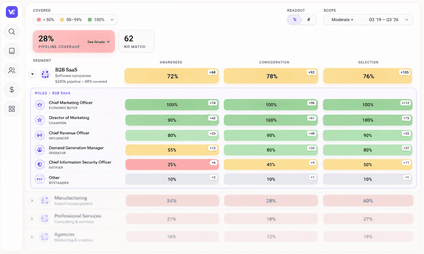
Jay's take: if you scale what product marketing produces (persona briefs, messaging frameworks, campaign foundations) alongside enablement, you arm sales faster and launch sooner. That's the problem VelocityEngine was built to solve.
Governance Replaced Experimentation
Every panelist described the same arc. Early 2023: "Bring your own AI tool to the party." Late 2024: chaos.
Mitch Speers, CRO at Buyer Foresight, said his team avoided whiplash by keeping generative tools out of reps' hands entirely. Instead, they surface research and insights. Reps use that information to shape their pitch, but they don't build prompts or run agents themselves.
A shift toward rigor is taking place. Leigh-Margaret described how her team now starts with the problem statement, confirms alignment that the problem ranks high enough to solve, then evaluates solutions. No more "I found this cool tool" driving strategy.
Claire Maynard, VP of Marketing at Common Room, flagged a related trap. Teams jump to automation before fixing data foundations. An AI SDR connected to a messy Salesforce produces garbage. The harder, slower work of unifying and cleaning data has to come first.
The UI Is Shifting. Most Tools Haven't Noticed.
The way people interact with software is evolving and Jay flagged a deeper change coming. Traditional application workflows (click here, navigate there, fill out this form) don't match how users think anymore.
People now expect chat-based, interactive environments. They've trained on ChatGPT and Claude. They want to talk to their tools, not click through them.
Tools that ignore this shift will feel dated fast. The ones that adapt will define the next generation of GTM software.
What Still Matters in 2026
The panel closed with a simple question: no matter how automated things get, what's one thing that will still matter?
Jay: "Brand and narrative."
Claire: "Deeply understanding customer journeys."
Mitch: "Getting in a room with your prospect. Benefit first, ask second."
Lisa: "Brand."
Leigh-Margaret: "Human alignment. Humans will still have to interact with humans."
Doug: "The story matters. 90% of the deal happens when you're not in the room. Buyers can't retell your speeds and feeds. Build stories they can repeat."
The Hype Phase is Ending
The panel agreed, 2026 will reward teams that extract real value from AI, not teams that experiment endlessly. That means rethinking workflows before adding tools. It means investing in product marketing as a force multiplier. It means accepting that brand, narrative, and human connection still win deals.
And it means moving faster than the teams still stuck in planning mode.
If you want to see how VelocityEngine helps lean teams launch faster, check out our GTM Campaign Kit.