Fifteen posts from one webinar is easy. Fifteen posts that still mean something is the tough part of the job.
Every content leader knows the atomization promise. Record one webinar, and out come the clips, the carousel, the five LinkedIn posts, the email, the blog recap. One asset becomes fifteen. The output chart looks incredible.
Then you read the fifteen. The clips are context-free. The carousel flattened the argument into platitudes. The LinkedIn posts could have come from any company in the category. The original asset had a point of view, and somewhere in the multiplication the point of view leaked out. What remains is volume that carries none of the intent that made the source worth atomizing.
That is atomization theater. Plenty of derivatives, plenty of motion, none of the meaning. Real atomization is a different discipline, and the discipline comes down to whether intent travels.
What Atomization Theater Looks Like
Atomization theater is recognizable by its output chart. One source asset, a dozen derivatives, a number that looks great in a report. The work reads as productive because the count went up.
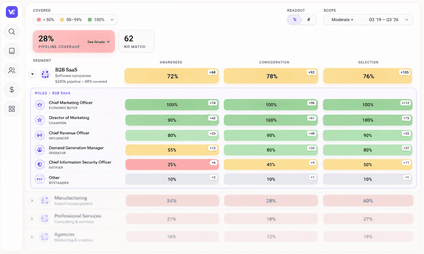
Look closer at the derivatives and the problem shows. Each one came from stripping the source down to a quote or a stat and dropping it into a template. No derivative knows which segment it is for, which persona it speaks to, or where in the funnel it belongs. They are fragments of a good asset, scattered, each one carrying a little less of the original than the last.
The team feels busy. The library grows. The coverage it represents barely moves, because fifteen versions of the same context-free fragment cover the same ground one of them already covered.
Intent Is the Thing That Travels
Intent is a specific set of things the source asset knew about itself. Who it was for, by segment and persona. Where it sat in the funnel. Which product it supported. Which channel it was built to land on.
When those travel with each derivative, atomization compounds. The webinar's evaluation-stage argument becomes an evaluation-stage email for the same persona, a comparison post for the segment that was in the room, an enablement one-pager for the rep working that exact deal. Each derivative inherits the source's intent and aims it at a specific place. The count rises and the coverage rises with it, because every piece lands somewhere real.
"Strip the intent and you get fragments. Carry it forward and you get range."
Strip the intent and you get fragments. Carry it forward and you get range.
Build Once With Intent Across Dimensions
The fix sits upstream of the atomizing and it starts at the brief.
A core asset built for atomization knows its derivatives before they exist. The brief names the segments, personas, funnel stages, products, and channels the asset and its descendants are meant to cover. The source gets built with that whole range in mind. By the time you atomize, you are carrying a plan forward, and each derivative was already accounted for in the design.
Build once with intent across dimensions, and atomization becomes the moment the plan executes. The derivatives were always part of the design. Atomizing produces what the brief already called for.
On-Brand by Construction
There are two ways to keep fifteen derivatives on-brand. Police them after the fact, reviewing each one and sending half back. Or build them so they inherit voice, positioning, and ICP from the same foundation the source did.
The second way is on-brand by construction. Every derivative carries the brand because it came from the same source of truth. The drift never enters, so review never has to catch it. For a content leader running a small team against a large surface area, that is the whole job. Review does not scale. Inheritance does.
This is what separates a content supply chain from a content scramble. The supply chain carries brand and intent forward by design. The scramble reintroduces both at every step and hopes review catches what slipped through.
The Content Strategist's Read
Here is the check: take any derivative your team shipped last week and ask what it knows about itself. Which segment, which persona, which funnel stage, which product, which channel. A derivative that can answer those questions carried its intent. A derivative that cannot is a fragment that happened to ship.
The measure of atomization is how much of the original each piece still carries. Build with intent across dimensions, and the count and the coverage rise together.