
Every B2B content type your campaign needs. Built in one pass.
Most AI content tools start at the brief. VelocityEngine starts at your revenue plan, shows which buyers have no content behind them, then generates the whole campaign in one pass, from blog posts and eBooks to the SDR sequences and calendar your team needs to launch.
Every asset built in minutes.
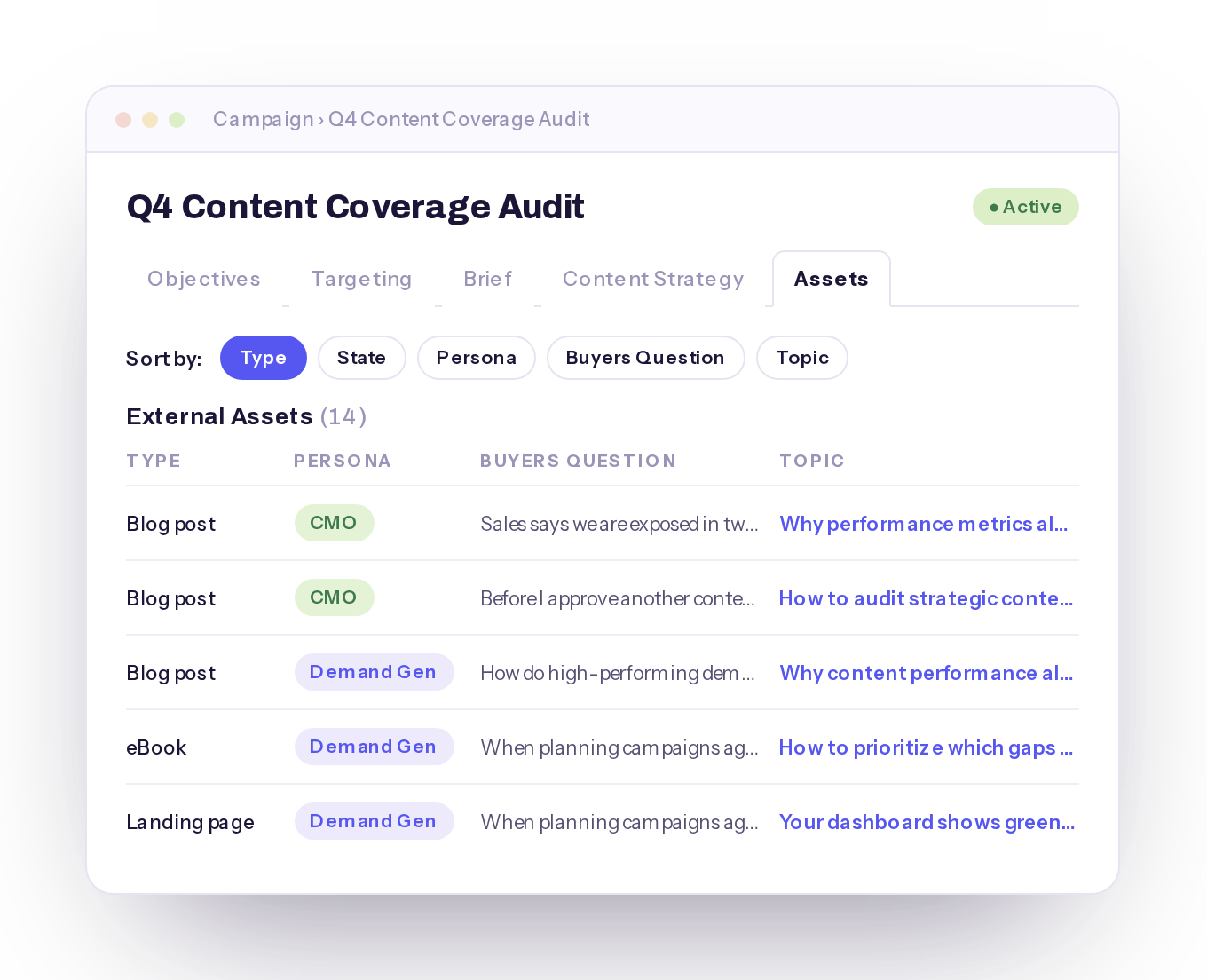
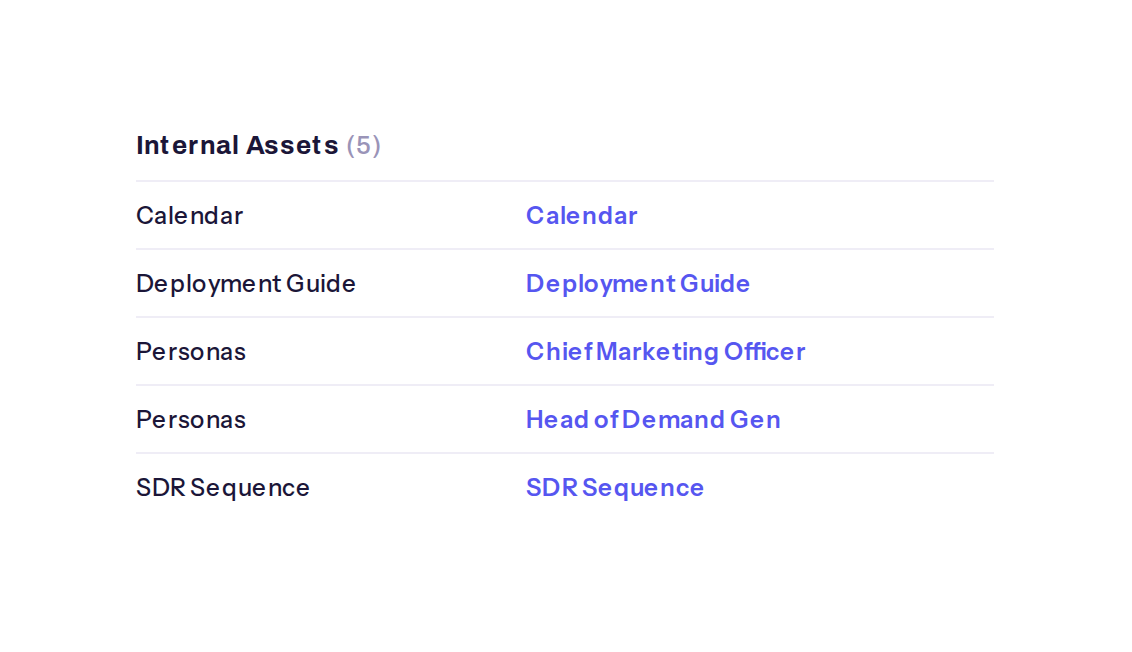
Here's one of our own campaigns. A single brief produced 14 customer-facing assets and 5 internal ones, from blog posts and an eBook to SDR sequences and a deployment guide. Every asset is mapped to a persona and a buyer's question.
How is VelocityEngine different from other AI content tools?
Most AI content platforms turn a brief into assets. VelocityEngine also tells you which brief to write, by scoring your content against your revenue plan, and then builds the full campaign in one B2B campaign system with no agents to set up or manage.
Start with the plan, not the prompt.
Your content coverage heatmap shows where the plan is covered and where you're exposed, by segment, persona, and funnel stage. You build the campaign that closes a real gap, not the one that felt urgent this week.
One campaign, one system.
You don't choose from a library of agents or stitch outputs together across tools. The campaign is the unit of work. Objectives, targeting, brief, content strategy, and every asset stay connected in one workspace.
Built for B2B buying committees.
Every asset is shaped for the persona and bowtie stage it serves, across the whole buying committee. That includes the eBooks, SDR sequences, and sales enablement materials that general-purpose AI tools leave out.
From foundation to finished campaign
Set your foundation once.
Encode your positioning, messaging, personas, segments, and brand voice one time. Every asset you create after that draws from it automatically, so you never paste strategy into a prompt again.
Generate the campaign brief and set the scale.
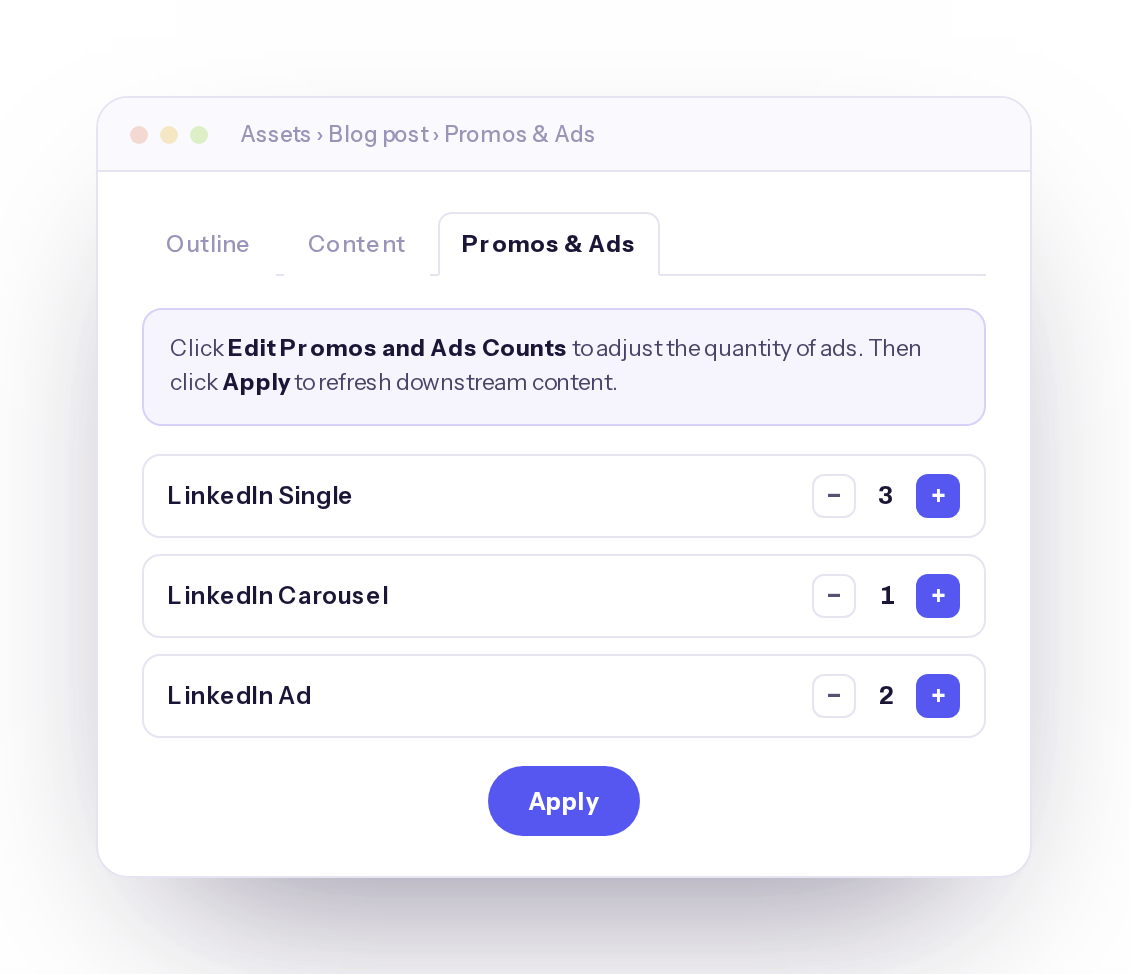
Pick a bowtie stage and the personas you're targeting, and VelocityEngine generates the campaign brief from those inputs and the foundation you've already set. Then choose how much the campaign needs, down to how many promos and ads each asset gets. Change the count, click Apply, and everything downstream updates.
Generate the whole campaign at once.
VelocityEngine produces every external and internal asset together, each mapped to a persona, a buyer's question, and a bowtie stage. The blog, the eBook, the landing page, and the promos all tell the same story because they come from the same brief.
Refine with AI Assist.
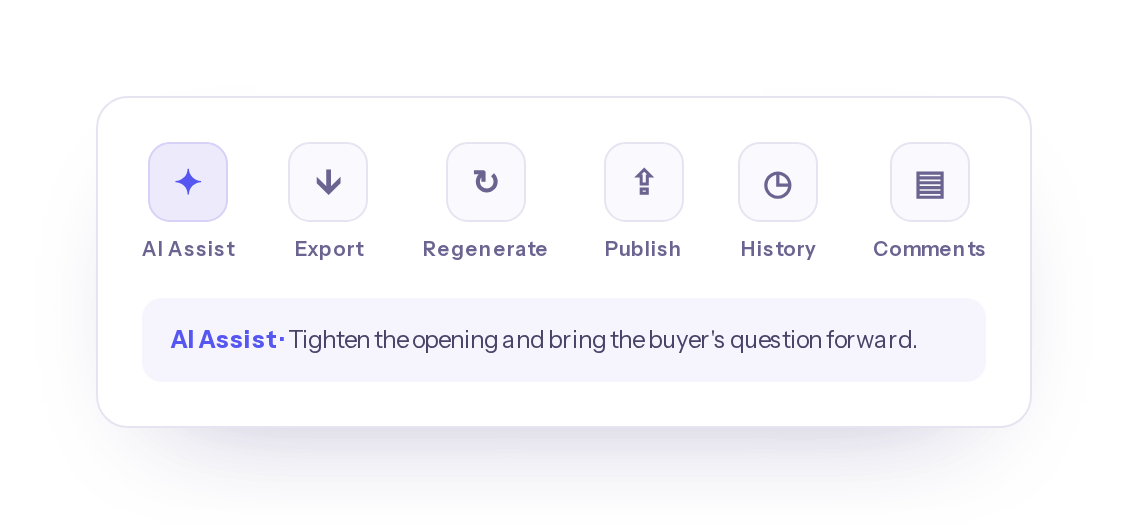
Use AI to review, tighten, or regenerate any asset. Track every change in version history, leave comments for your team, and export when it's ready.
Faster content development. Higher campaign velocity.
Content development usually stalls in the handoffs: briefing a writer, waiting on drafts, realigning them to the messaging, then starting over for the next format. When your foundation and brief already exist, that cycle collapses. You move from strategy to an activation-ready campaign in one workflow, and your team spends its time refining and adding expertise instead of starting from a blank page.
11 days Paysafe launched a full vertical campaign in 11 days, down from 3+ months.Read the Paysafe case study →Can AI-generated content stand up to B2B buyers?
It can, when the AI starts from your strategy instead of a blank prompt. Generic AI content is generic because the tool knows nothing about your buyers, positioning, or voice.
Every asset clears six checks before it ships.
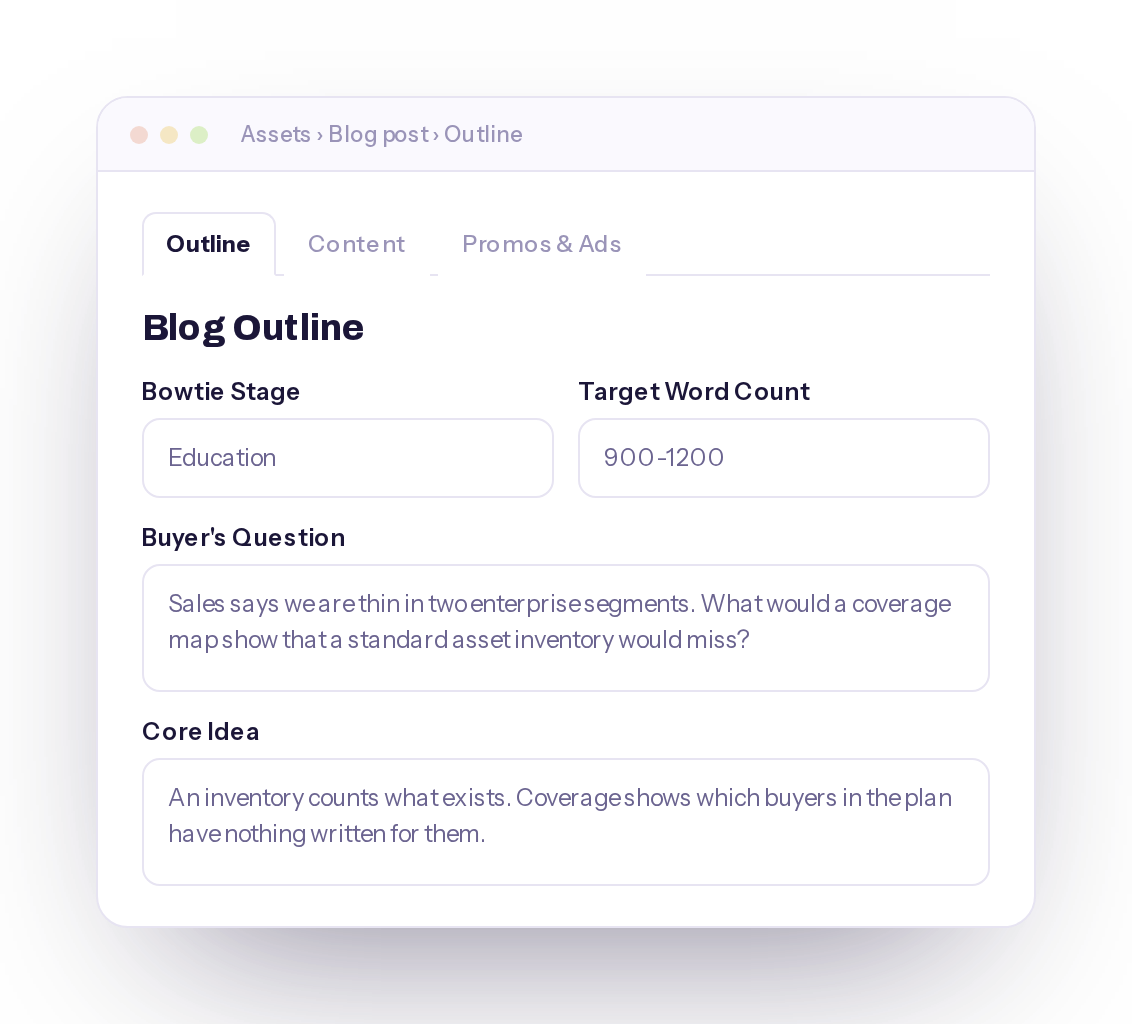
Answers a buyer's question
Starts from what a real buyer is asking, not a keyword.
Outline before draft
Approve the strategy while revisions are still cheap.
Governed by your Foundation
Messaging and voice built in at creation, not after.
Right persona, right stage
A decision piece for a CMO never reads like a practitioner primer.
SEO and GEO ready
Built for search and AI answers from the first draft.
Human in the loop
Review gates, comments, and version history.
B2B content types VelocityEngine creates
External assets are what your buyers see. Internal assets are what your team uses to run the campaign. Both come from the same brief, so what sales says matches what marketing publishes.
External assetsB2B blog posts
Written from your brief to answer one buyer's question, in your voice and on your keyword strategy.
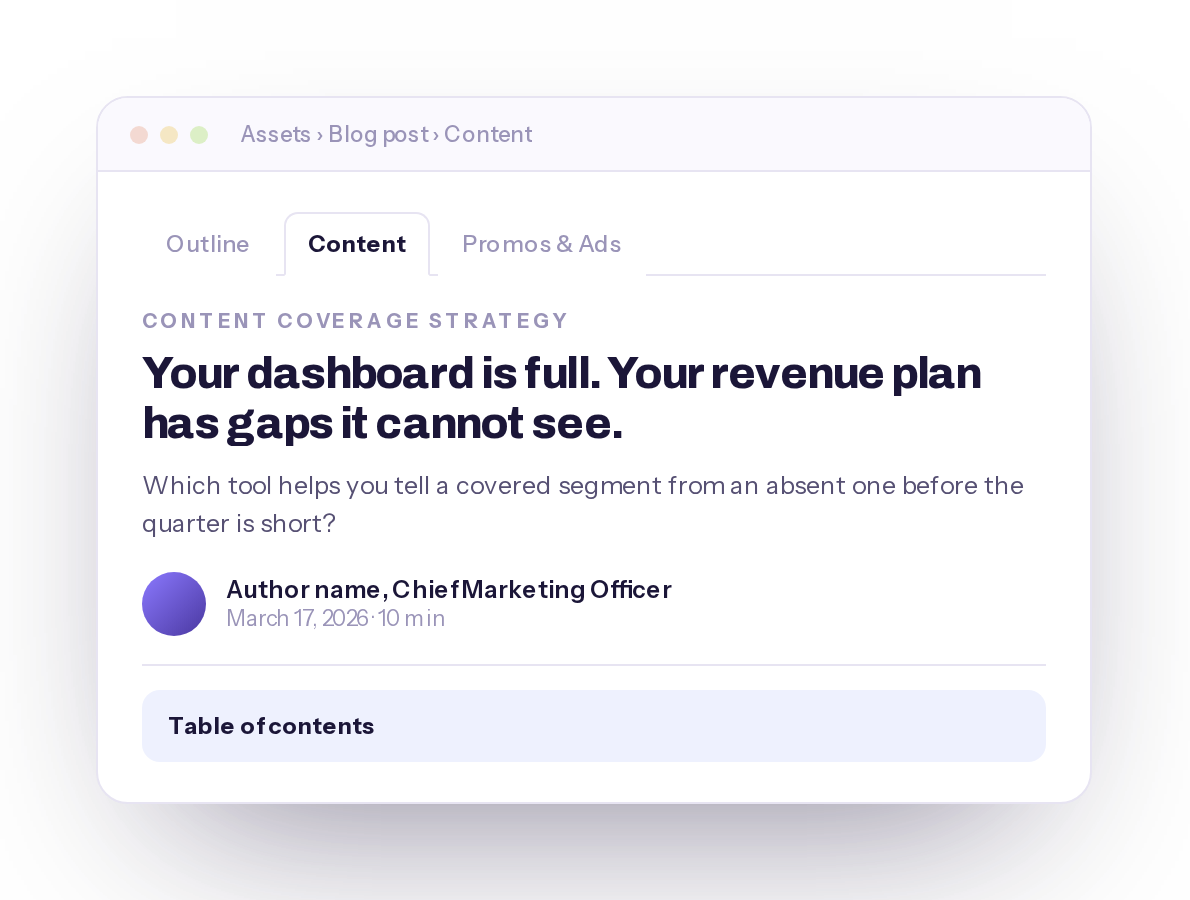
eBooks
Built chapter by chapter, so each chapter breaks down into blog posts, emails, and promos.
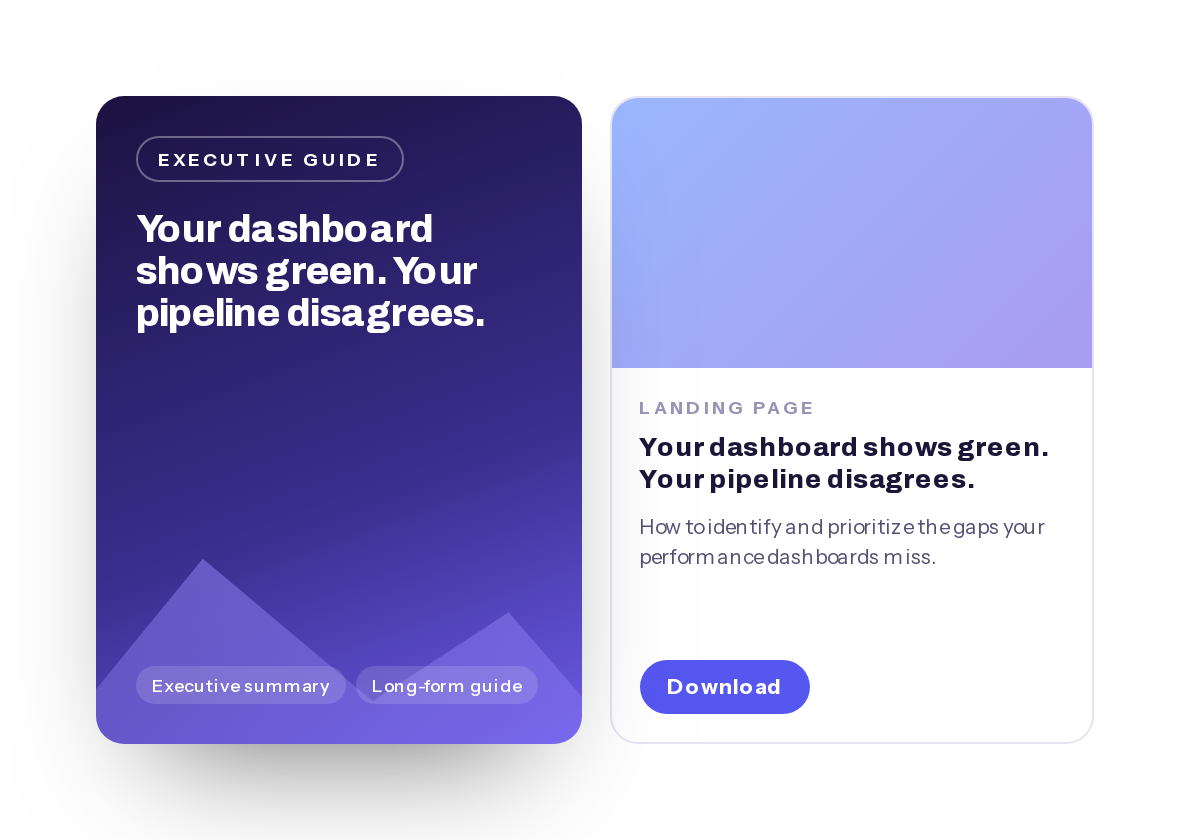
Landing page copy
Written from the same brief as the ads and emails that drive traffic to it. Every eBook gets one automatically.
Email sequences
Multi-touch sequences that follow the buyer journey, with a CTA matched to each stage.
Promos and ads
LinkedIn posts and ads written for each blog post and eBook. You set the count.
SDR sequences
Written from the same brief and personas, so outbound and inbound reinforce each other.
Persona documents
A document for every persona the campaign targets, drawn from your Foundation.
Solution briefs
Built from the same Foundation, and regenerated when positioning changes.
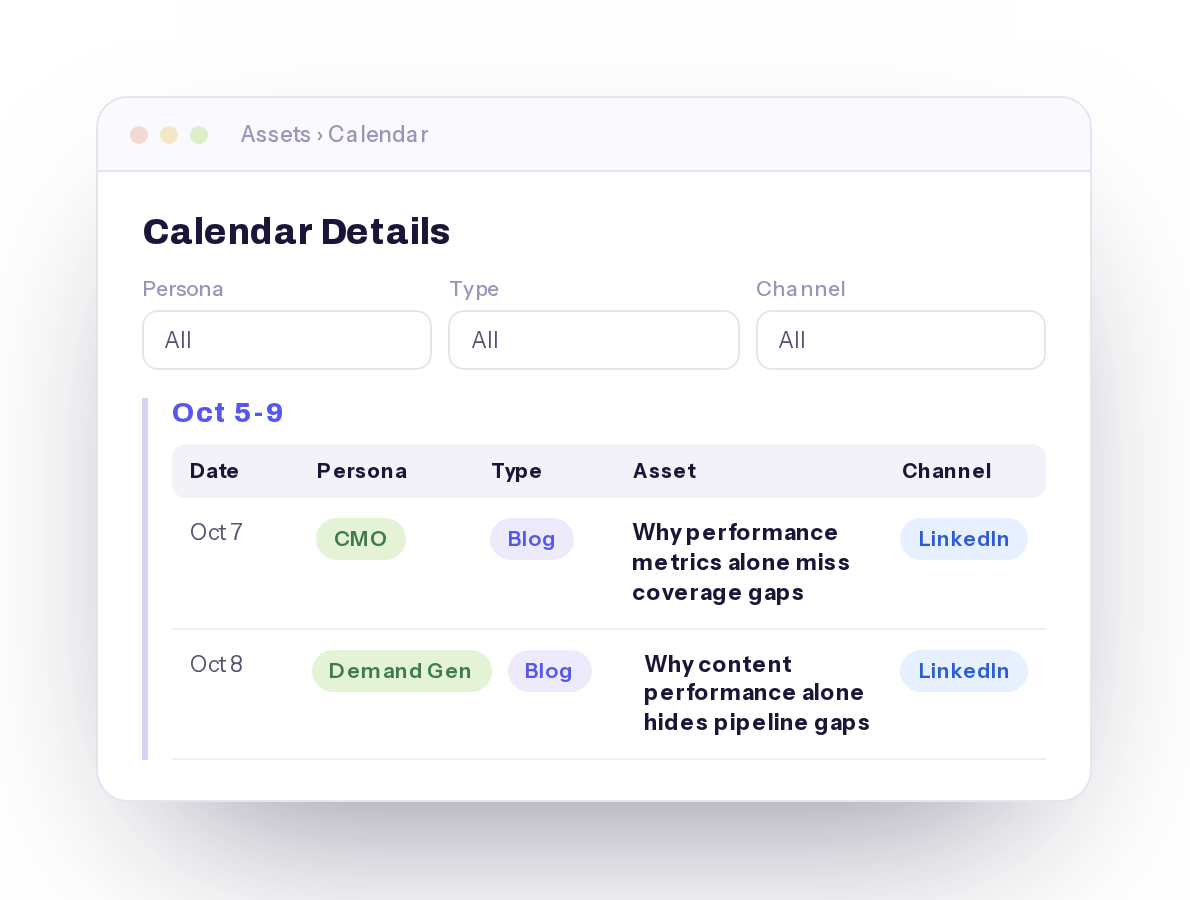
Content calendar
Every asset and promo by week, with persona, type, and channel. Filter to see what ships and who it's for.
Deployment guide
How and where each asset goes live, so the campaign launches as planned.
One source, many formats
When you break a blog post into promos, an email excerpt, and an SDR touch, every derivative keeps the persona, bowtie stage, messaging angle, and brand voice of the original. eBooks work the other way, becoming the source for a campaign's blog posts, emails, and promos. You're not creating separate assets. You're creating multiple expressions of the same strategy.
Where content creation fits in the platform
Foundation
Brand voice, personas, competitive context
Planning
Audience, channel, funnel stage
Creation
Every content type, one pass
Coordination
Sequencing across channels
Every content type is generated in the Content Creation module. Each asset draws from your Strategy Foundation (brand voice, personas, competitive context) and your Campaign Planning brief (audience, channel, funnel stage). Finished assets move into Launch Coordination for sequencing across channels.
Frequently asked questions
What types of B2B content can VelocityEngine create?+
VelocityEngine creates blog posts, eBooks, landing pages, email sequences, and promos and ads for your buyers, plus SDR sequences, persona documents, solution briefs, a content calendar, and a deployment guide for your team. You generate them together from one campaign brief instead of one at a time.
What internal assets does VelocityEngine create?+
Along with customer-facing content, every campaign includes the materials your team needs to run it: SDR sequences, persona documents, solution briefs, a content calendar, and a deployment guide. They come from the same brief as your external assets, so the whole team works from one plan.
What's the difference between content creation and content development?+
Content creation is producing an individual asset. Content development covers the full process around it: strategy, briefing, creation, review, and adaptation across formats and audiences. VelocityEngine handles both in one system.
Will AI-generated content sound like our brand?+
Yes. Your brand voice, messaging, and positioning live in your Foundation, and every asset inherits them at creation. Your team reviews and approves every piece before it ships.
Do I need to build or manage AI agents?+
No. AI is built into the campaign workflow, so your team works from a foundation and a brief instead of configuring, chaining, or maintaining agents. You spend your time on strategy and review, not prompt setup.
Can we edit or improve content after it's generated?+
Yes. You can edit directly, use AI to review or regenerate any asset, leave comments for your team, and roll back with version history before routing it through approval.
How do I decide what content to create next?+
Build order should come from where your revenue plan is uncovered, not from what performed last quarter. A content coverage heatmap shows which segments, personas, and funnel stages have nothing behind them, so you can rank the gaps by the pipeline at stake.
Do you know what to create next?
Most teams can list the content they have. Few can say which segment, persona, or funnel stage has nothing behind it. Request a content heatmap to see where your content covers the revenue plan, where you're exposed, and what to build first.
Request your free content heatmap →