Six campaign types. One operating system.
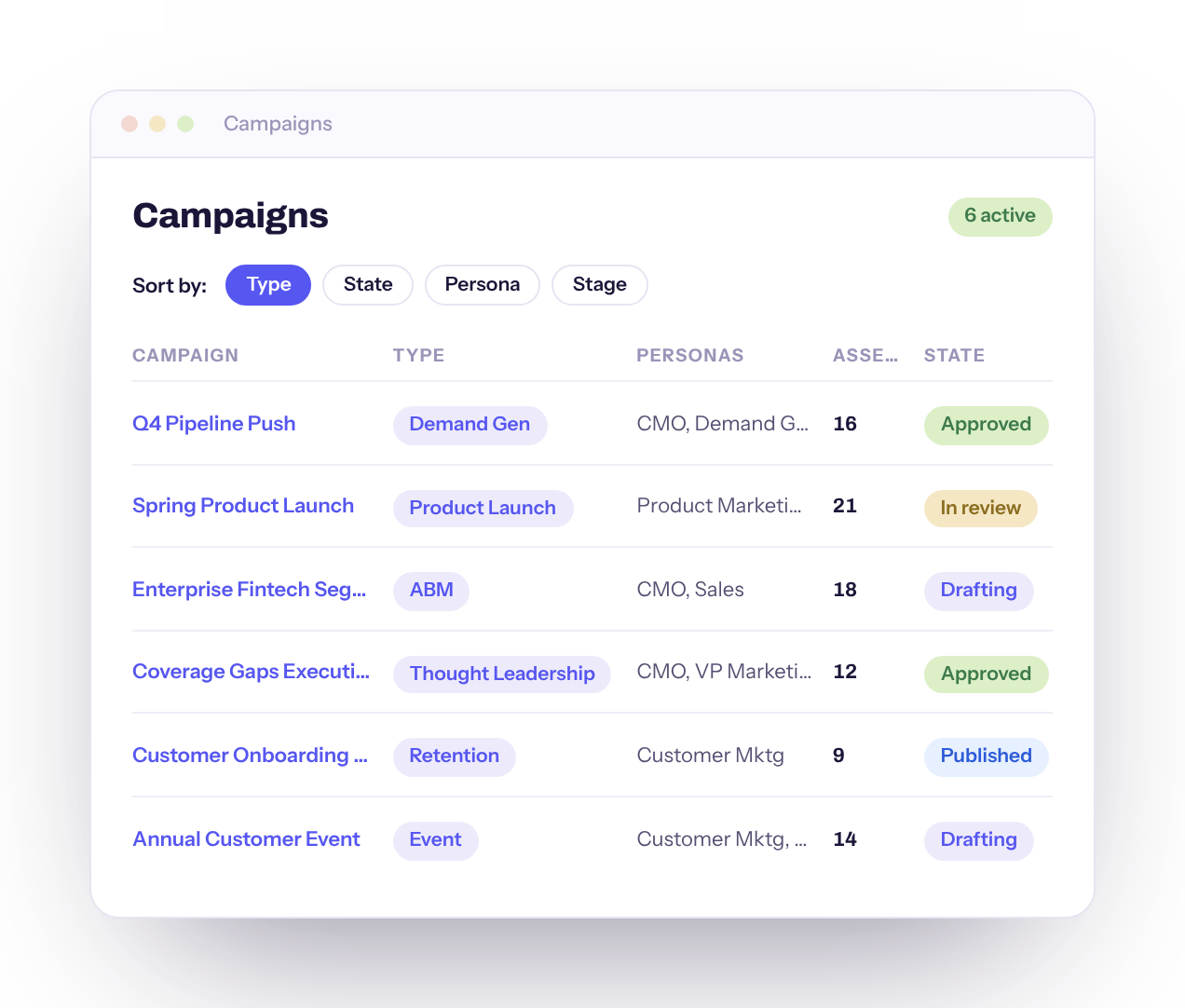
Demand gen, product launches, ABM, thought leadership, retention, and events each need a different mix of assets, but they all draw from the same positioning, personas, and revenue plan. VelocityEngine keeps that foundation in one place, shows which buyers each campaign still leaves uncovered, and builds the full campaign for whichever type you're running.
Complete campaigns cover every buyer on the plan.
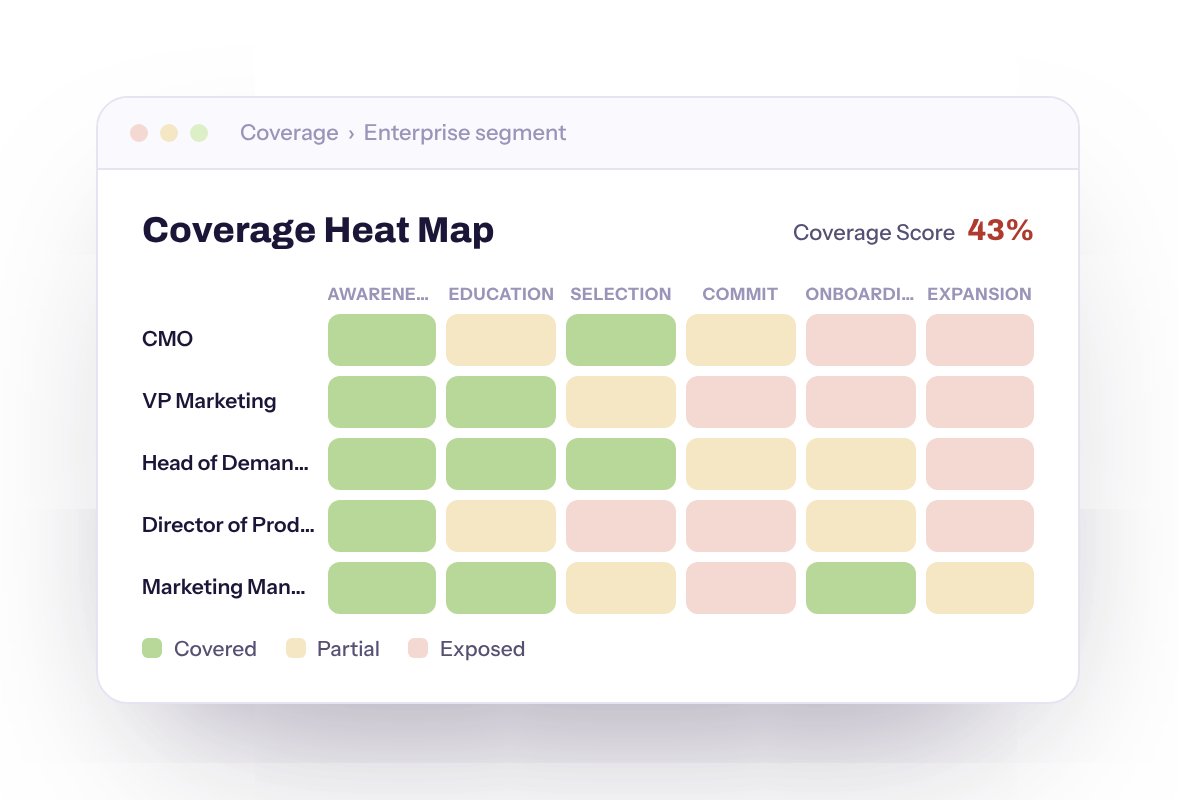
Most campaigns ship with a hero asset and a few promos, and the rest of the buying committee gets nothing written for them. The Coverage Heat Map shows where, by segment, persona, and funnel stage, so every campaign starts from a gap your revenue plan cares about.
Six campaign types VelocityEngine runs
Each campaign type has its own mix of assets, audiences, and timing. The foundation underneath stays the same, so a product launch and a customer nurture track still sound like the same company.
Demand generation
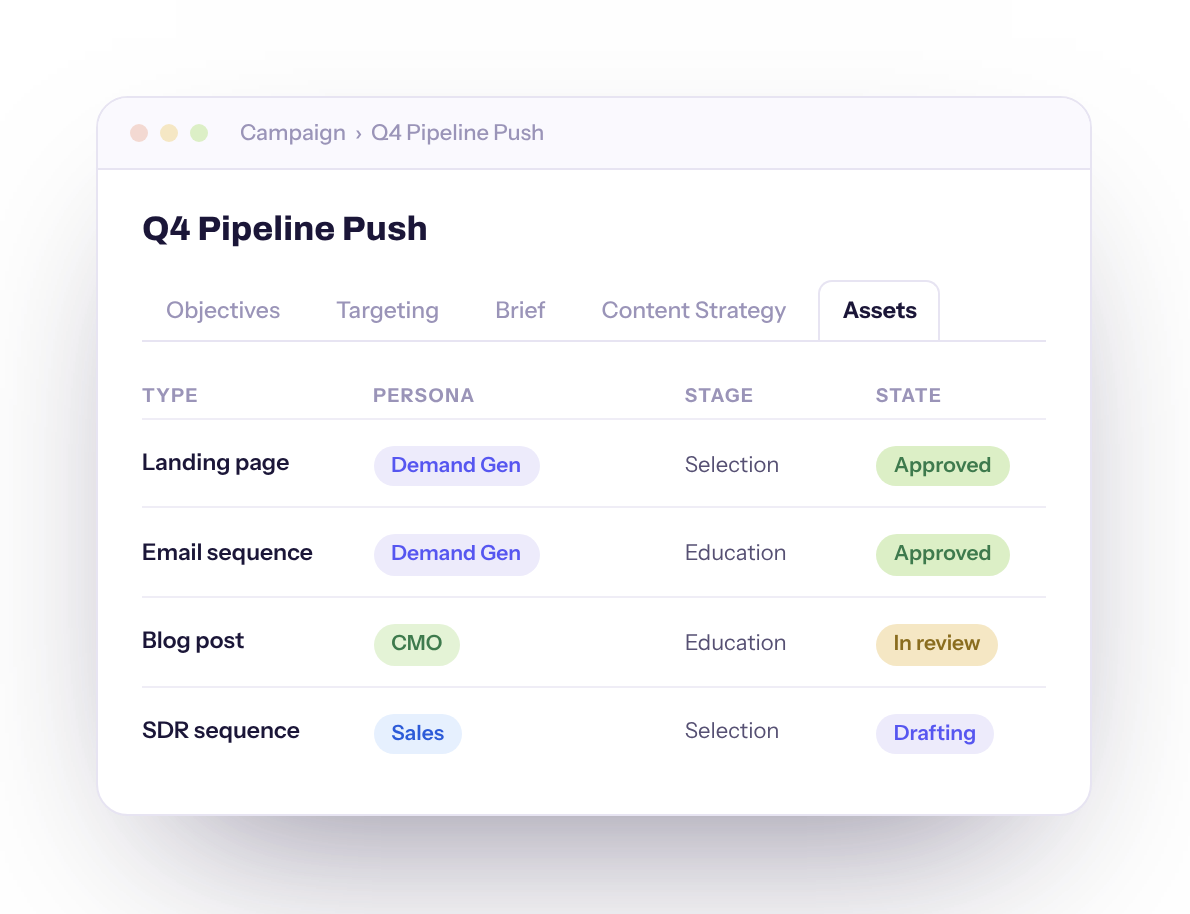
Demand campaigns run on volume and consistency, and both break down when every landing page, email, and ad gets briefed on its own. VelocityEngine builds the whole campaign from one brief tied to a gap on your plan, so the landing page, the nurture emails, and the paid promos all make the same argument to the same buyer.
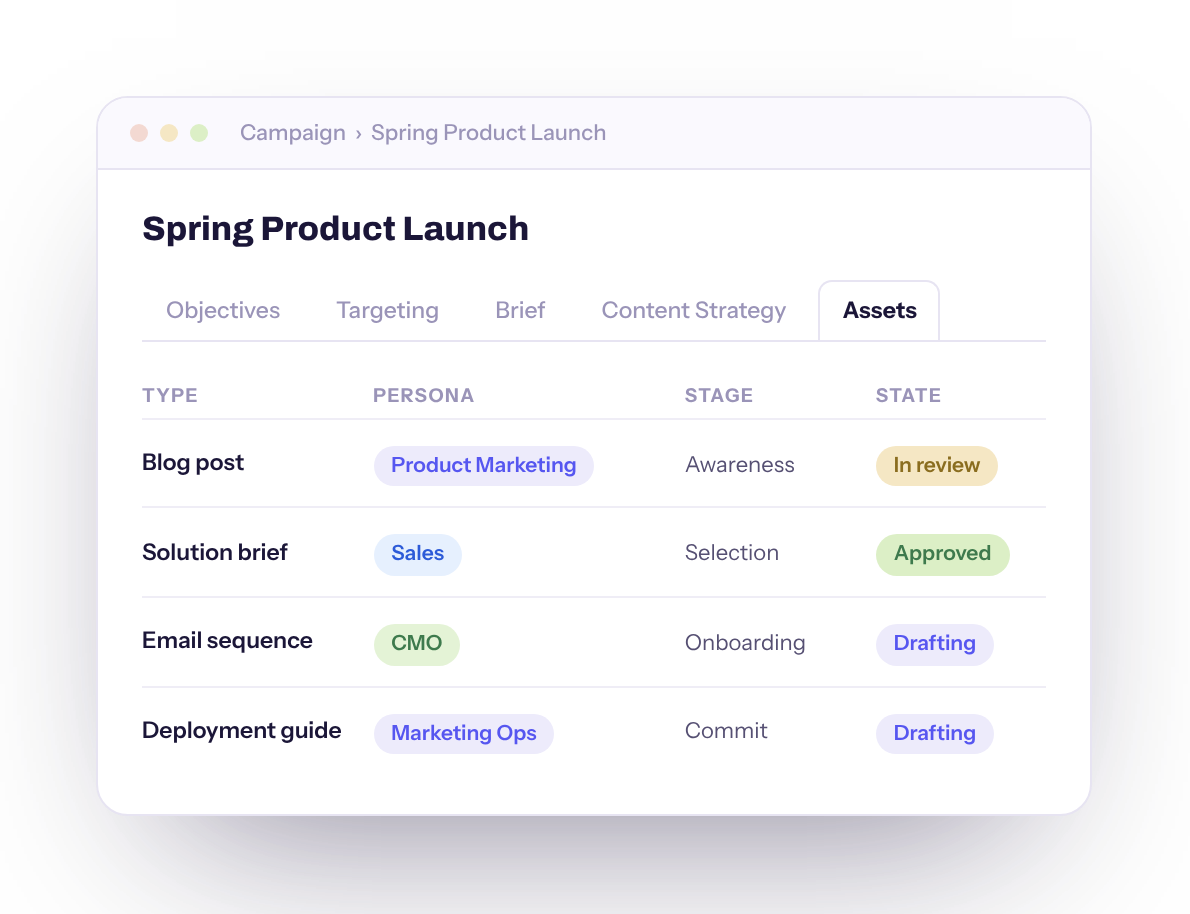
Product launch
A launch reaches customers, prospects, sales, and partners at the same time, and the message drifts when each team writes its own version. Your launch positioning lives in the Foundation, so every launch asset starts from the same story, and sales gets its enablement in the same pass as the customer emails.
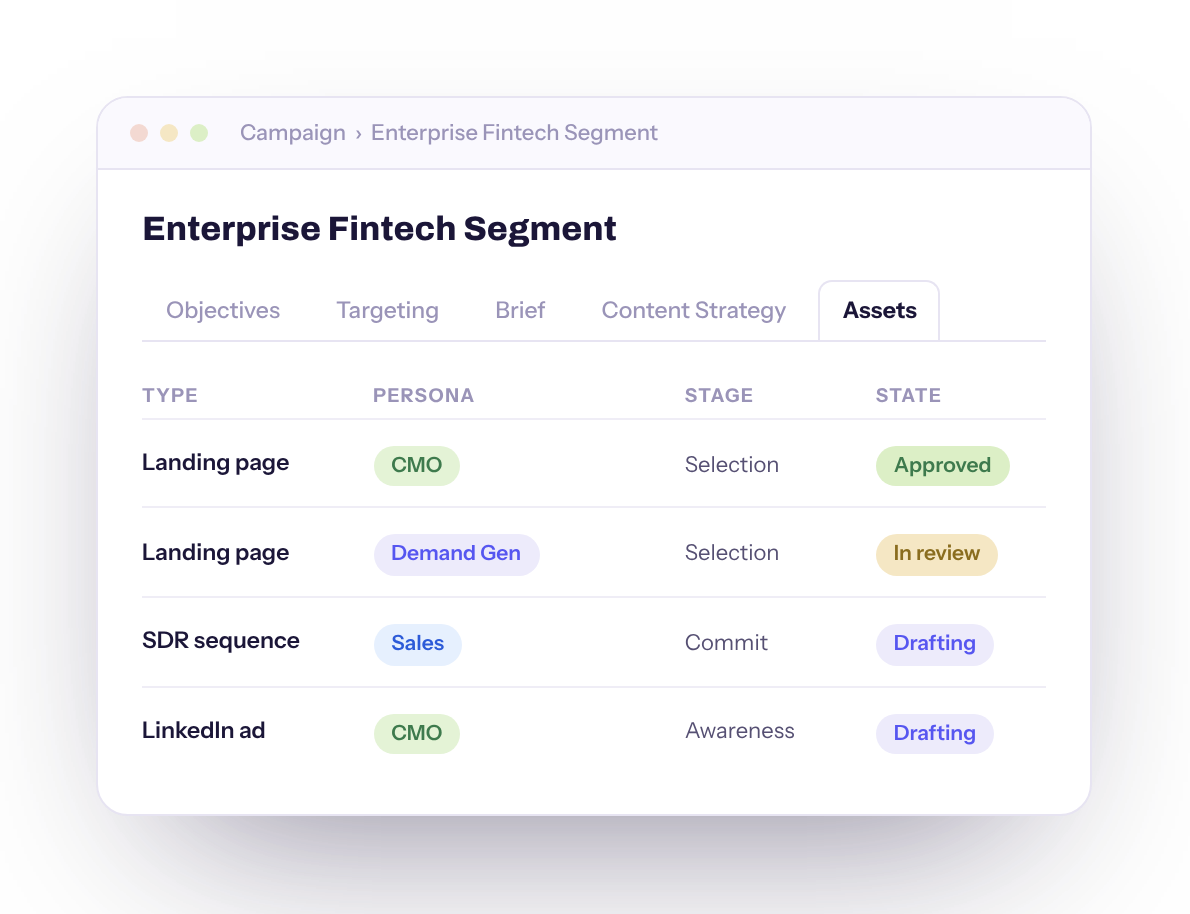
Account-based and segment campaigns
ABM and segment campaigns tell the same story a dozen slightly different ways, and building each version by hand doesn't scale past a few accounts. You set the segments and personas once, and VelocityEngine varies the content by segment, persona, and channel from the same brief, so each segment gets content written for it and the core message holds.
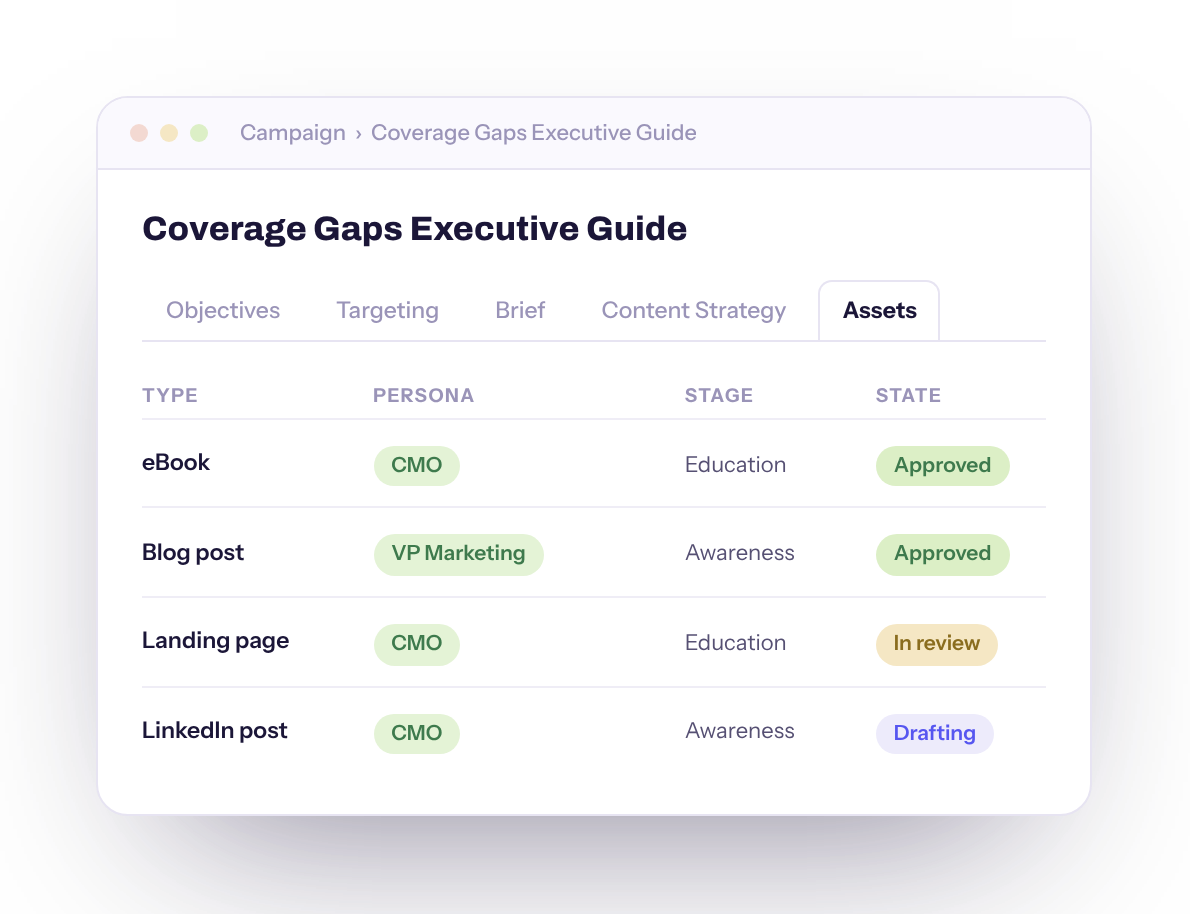
Thought leadership
Thought leadership stalls when every piece starts from a blank page and a busy executive's calendar. VelocityEngine starts from the buyer's question and your positioning, drafts the long-form piece, and breaks it into the posts, emails, and promos that carry it, so your experts can spend their time sharpening the point of view.
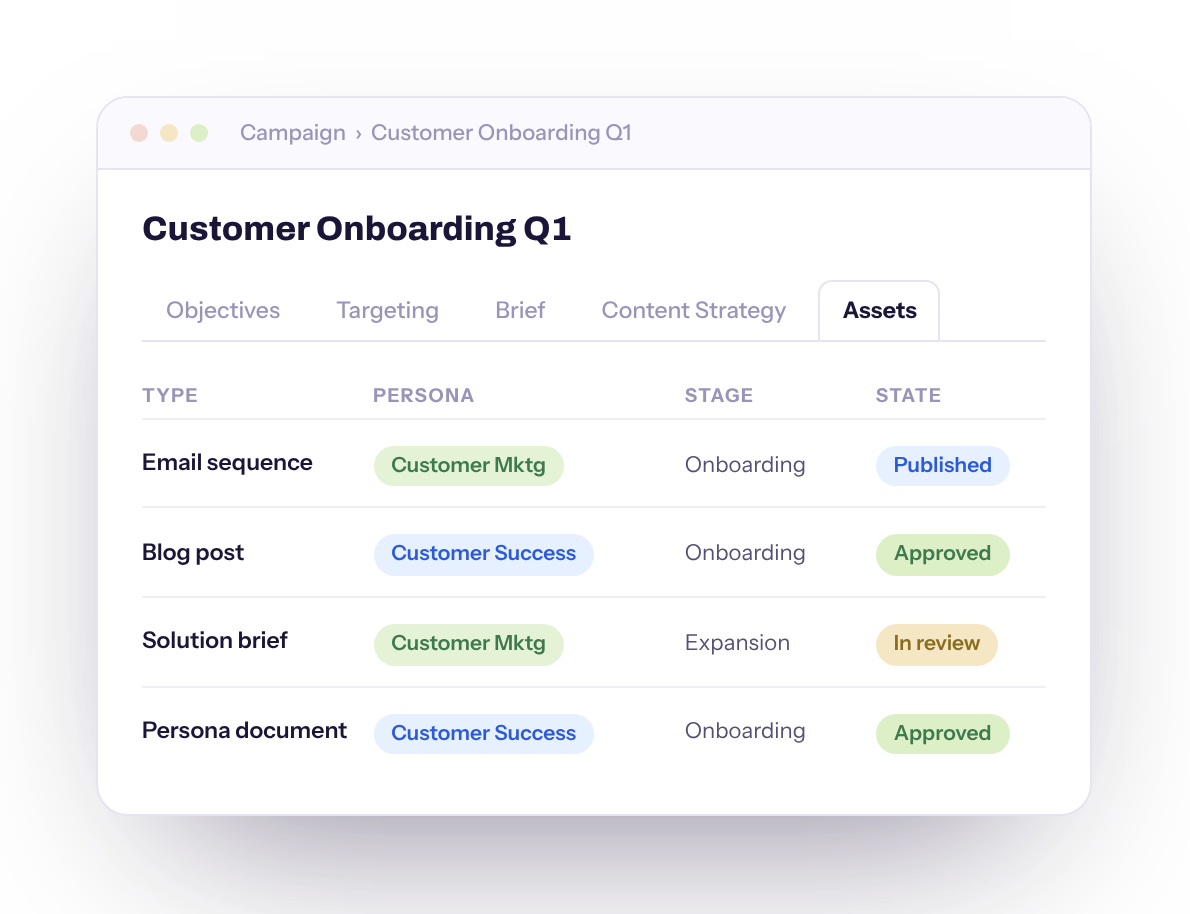
Retention and expansion
Customers need different questions answered at onboarding, adoption, and renewal, and those campaigns often get written from scratch each time. You pick the post-sale stage and the customer personas, and VelocityEngine builds the campaign for that stage from the same foundation your acquisition campaigns use, so the story a customer bought into is the one they keep hearing.
Event marketing
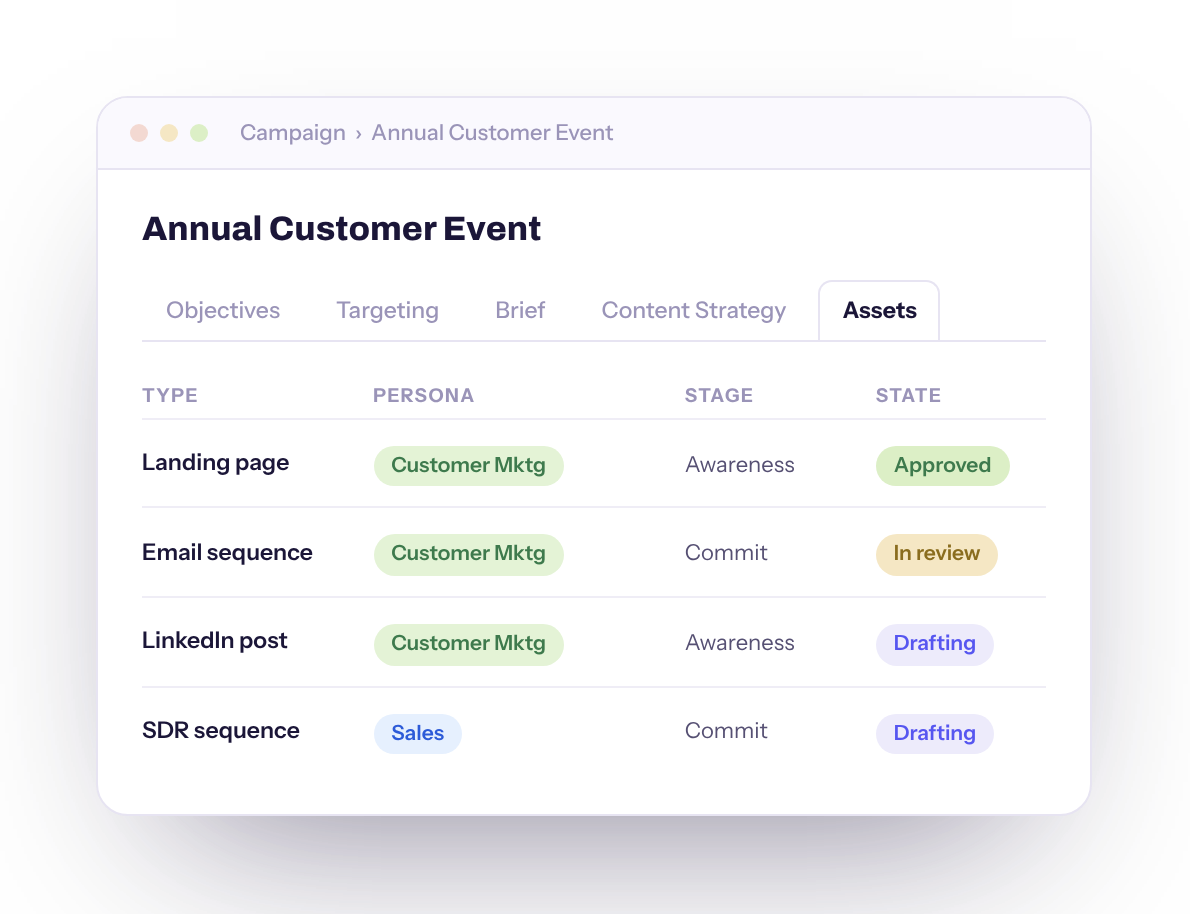
An event needs promotion before it, material during it, and follow-up after it, and those pieces usually get written by different people at different times. VelocityEngine plans the event as one campaign, so registration, reminders, and follow-up all carry the same message, and the deployment guide shows your team what goes live when.