
<img height="1" width="1" style="display:none" src="https://www.facebook.com/tr?id=4246513698961258&amp;ev=PageView&amp;noscript=1">
The Campaign Operating System

One system, from revenue plan to published campaign.

Five layers that run the whole motion in one place. Your strategy governs every asset, your coverage names the gaps, and your team ships the campaigns that close them.

Why an operating system

Your revenue plan should drive the real work, not your content calendar.

Every stage of the loop reads from the same plan, so the system knows which gaps carry pipeline and what to build first. You could assemble a version of this yourself, and plenty of teams have, but the pieces don't share a plan, so nothing tells you what matters most.

Stitching it together yourself
One AI tool becomes five, none of them connected
Every brief starts blank, context re-entered by hand
Output drifts off brand, and teams do the rework
Nothing ties the work back to the revenue plan
It lives in one person's head, and leaves when they do
With VelocityEngine
One connected loop, audit through distribution
Briefs inherit your foundation automatically
Governed generation, on brand by default
Every campaign prioritized by the plan it serves
It stays in the system, for the whole team

Prompting is great for drafts, but a system can prioritize content against your revenue plan.

01 Foundations

One source of truth for every campaign.

Your messaging, personas, positioning, and competitive context structured into one operational foundation. Every campaign, every asset, every channel inherits your strategy automatically. No rebuilding. No drift.

Import your frameworks, decks, and battlecards, analyzed and normalized on the way in —
Structure them into refined ICPs, validated personas, and tiered messaging —
Work from one system of record, with updates propagated instantly —
Encode brand voice as operational guidance, not a style doc —
Change once, propagate everywhere — an upstream edit updates the work downstream
Auditable by design — every claim ties back to a committed decision
Explore Foundations →
Strategy Foundation
Messaging
Tiered architecture, ready for campaigns
Positioning
Statements that drive the messaging
ICP
Refined, and validated against the plan
Personas
Validated, with psychographic detail
Brand voice
Tone, word choice, storytelling patterns
Competitive context
Battlecards, win/loss, positioning contrast
Every campaign, asset, and channel inherits it automatically
02 Content Audit

Your content audit, tied to the revenue plan.

Most content audits become decks on shelves. A static deliverable cannot keep up with campaign velocity.

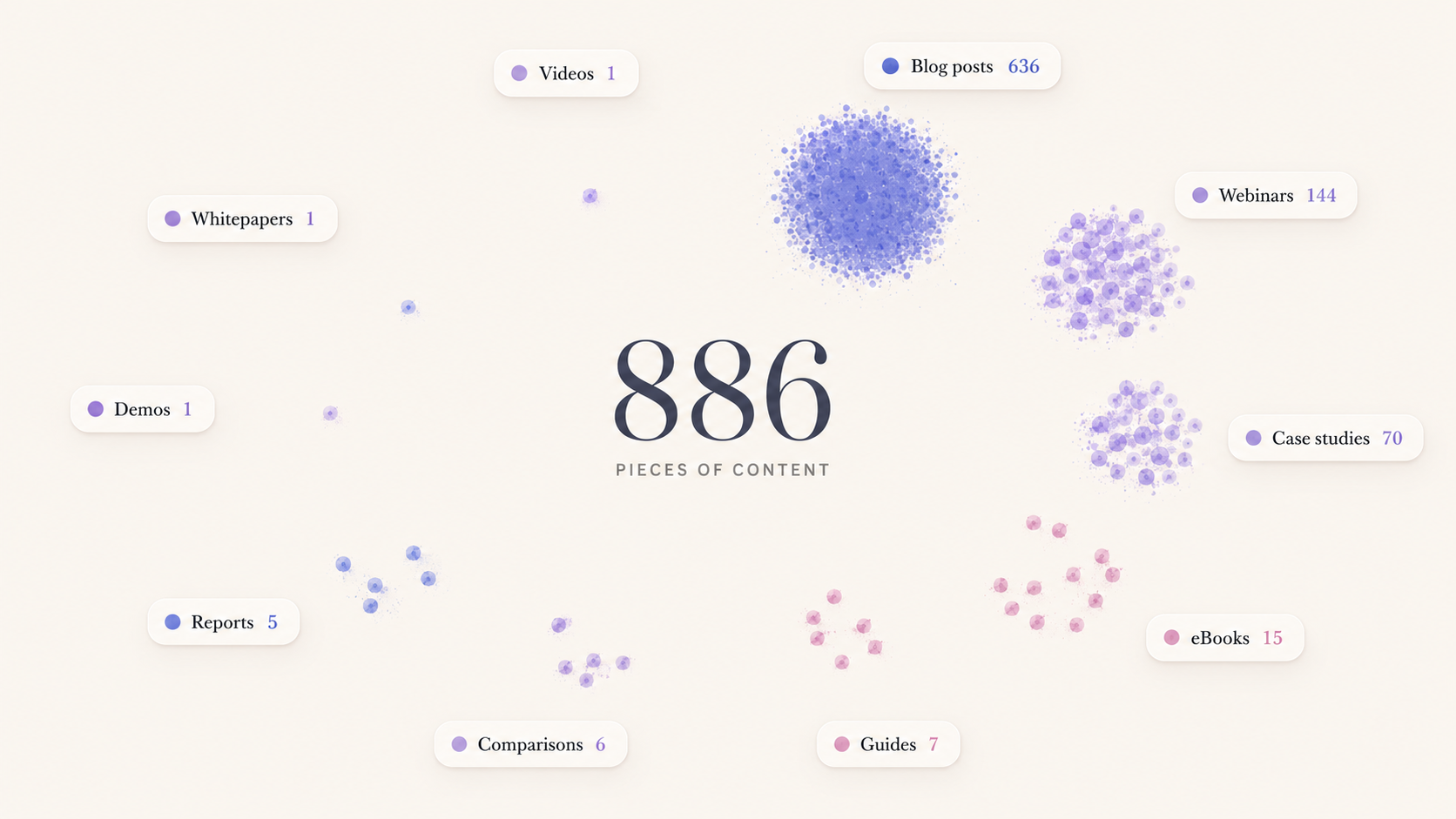
CampaignOS runs it continuously, across every segment, persona, funnel stage, product, and channel. The output is a Coverage Map your team builds and ships against.
velocity-audit_img0
Runs continuously — the view stays current as you ship and retire assets
Audit by every dimension — segment, persona, funnel stage, product, and channel
Turns gaps into campaign briefs designed to close them —
Import what you have — bootstrap from a recent audit, then keep it live
Get your Coverage Map →
03 Campaign Planning

Campaign briefs designed in hours, not weeks.

Briefs arrive pre-populated from your foundation with messaging, audience, channel strategy, and competitive context. Guided workflows carry the team from strategy to brief to plan. You refine and direct instead of reinventing.

Campaign
Onboarding Velocity · EducationActive
ObjectivesTargetingBriefContent StrategyAssets
Content Strategy
Confirm the content formats and buyer questions you want to answer in the generated content.
Asset Types
Blog PostseBooksSolution BriefsSolution WebpagesAccount Pages
!Assets are generated per persona. With 3 personas selected, a wide asset variety will produce a long list.
Buyer's Questions
Generated per persona, and used as input to the content we create.
VP Customer Success
We track adoption but I cannot tell which accounts are stalling before they reach first value.
What does a defensible time-to-value number look like at renewal?
Chief Revenue Officer
Renewals slip in accounts that never onboarded properly, and we find out too late.
Head of Lifecycle
We have three onboarding stages with no enablement behind them at all.
Guided workflows — strategy to brief to plan, every step scaffolded
Briefs auto-populate — audience, messaging, channel, and competitive context
Standardized intake — same template and approval gates across teams and markets
Full journey mapping — every asset knows its persona, stage, and channel
Explore Campaign Planning →
04 Content Creation

AI drafts in minutes.
Your team makes it brilliant.

Onboarding Velocity · EducationAssetsWhy Time-to-Value Is Now a Board-Level Metric
Blog Post
OutlineContentPromos & Ads
Customer Onboarding
Your Onboarding Plan Does Not Prove Customers Reach Value
Which accounts stall before first value, and how do you know before renewal is at risk?
Dana Whitfield
Director, Content Marketing
March 17, 2026 · 9 min
Table of Contents
Outline, long-form draft, and the promos and ads that launch it, in one asset.

Generation happens inside the campaign, not in a separate chat window. Blogs, ebooks, emails, landing pages, and social pull from your foundation and your brief, so every draft starts strategically aligned.

Your team applies judgment and craft. Review is built into every step, and nothing ships without human approval.

Generated in context — inside the campaign, from your foundation and brief
Controlled variation — one message, adapted per persona, channel, and region
Native atomization — one long-form asset becomes a full derivative set
Human review at every step — nothing ships without approval
Explore Content Creation →
05 Launch Coordination

See what's ready. Launch with confidence.

The assets are built and nobody can say whether the campaign is actually ready. Launch Coordination replaces the status meeting with a portfolio view: readiness by channel, explicit sequencing, and the structural context that makes measurement possible after launch.

Portfolio visibility — every campaign, in production through deployed, in one view
Channel-level readiness — green when a channel is genuinely ready to go
Explicit sequencing — see deployment order and catch timing conflicts
Clone and scale — reuse the full architecture for a new market or vertical
Explore Launch Coordination →
Launch readiness
Q3 FinTech push3 of 5 ready
Email sequenceReady
Landing pageReady
Blog seriesReview
Social assetsAttention
Paid amplificationReady
Landing page goes live before the email sends. Sequencing is explicit.

Faster launches, more output, more pipeline

faster launches
3–4×
content output
200%
pipeline growth
80–95%
lower content cost
Governed by design

Your strategy governs every asset, automatically.

Most AI tools start from a blank prompt, so messaging drifts and your best people rewrite everything that comes out. This works the other way: your foundation sits above every campaign, each asset inherits your positioning and rules from the start, and one upstream edit re-propagates everywhere. You keep human review at every step.

That is the difference between generating content and governing it.

GTM Foundation
MessagingPositioningVoiceICP
Blog
Email
LP
Ad
Brief
ABM
Change the foundation once. Every asset re-propagates.
testimonial-headshot
Head of Content

There's never been a view like this. Every content decision is informed by either intuition or dated information. This finally makes content creation intelligent.

Chris Hutchins
Head of Content, Audiense

Start with a content coverage heatmap.

Run it and see what your content covers against your revenue plan, before you commit to anything.