Campaigns planned from last quarter's top performers keep reaching the same role. Here's how to check which roles your campaign assets miss before you write the next brief.
TL;DR
- Campaign reporting counts engagement with assets that exist. A role you never wrote for produces no event, so no campaign dashboard shows the gap.
- Planning each campaign from the last one's top performers keeps you writing for the role you already reach.
- You can find the gaps by mapping campaign assets to the one role and stage each serves best. The cost is lower engagement on campaigns aimed at smaller, less proven audiences.
Your campaign dashboard looks healthy. The last campaign hit its engagement targets, the top assets are easy to spot, and the next planning meeting will start from them.
That's a reasonable way to plan, and it has a blind side. You build the next campaign for the people who engaged with the last one, which can mean the same role. Everyone else on the buying committee in your target accounts still has nothing written for them.
This post covers why your reporting can't show that, where campaign planning content gaps tend to sit, and how to find them in your own campaign assets before the next brief.
Looking at your whole content library rather than a single campaign? Read Your content library grew. Your buying committee coverage didn't.
Why can't campaign reporting show a missing buying role?
A campaign report counts interaction with assets that exist: views, downloads, registrations, and influenced opportunities. A role you never wrote for doesn't register as a low number. It never registers at all.
So a webinar can draw the right titles and a guide can reach the right accounts while the finance lead and the IT reviewer in those same accounts get nothing. Your dashboard has no field for that absence.
Your reporting is doing what it was built to do. Engagement metrics rank what you published, and they have no way to surface the buyer nobody wrote for.
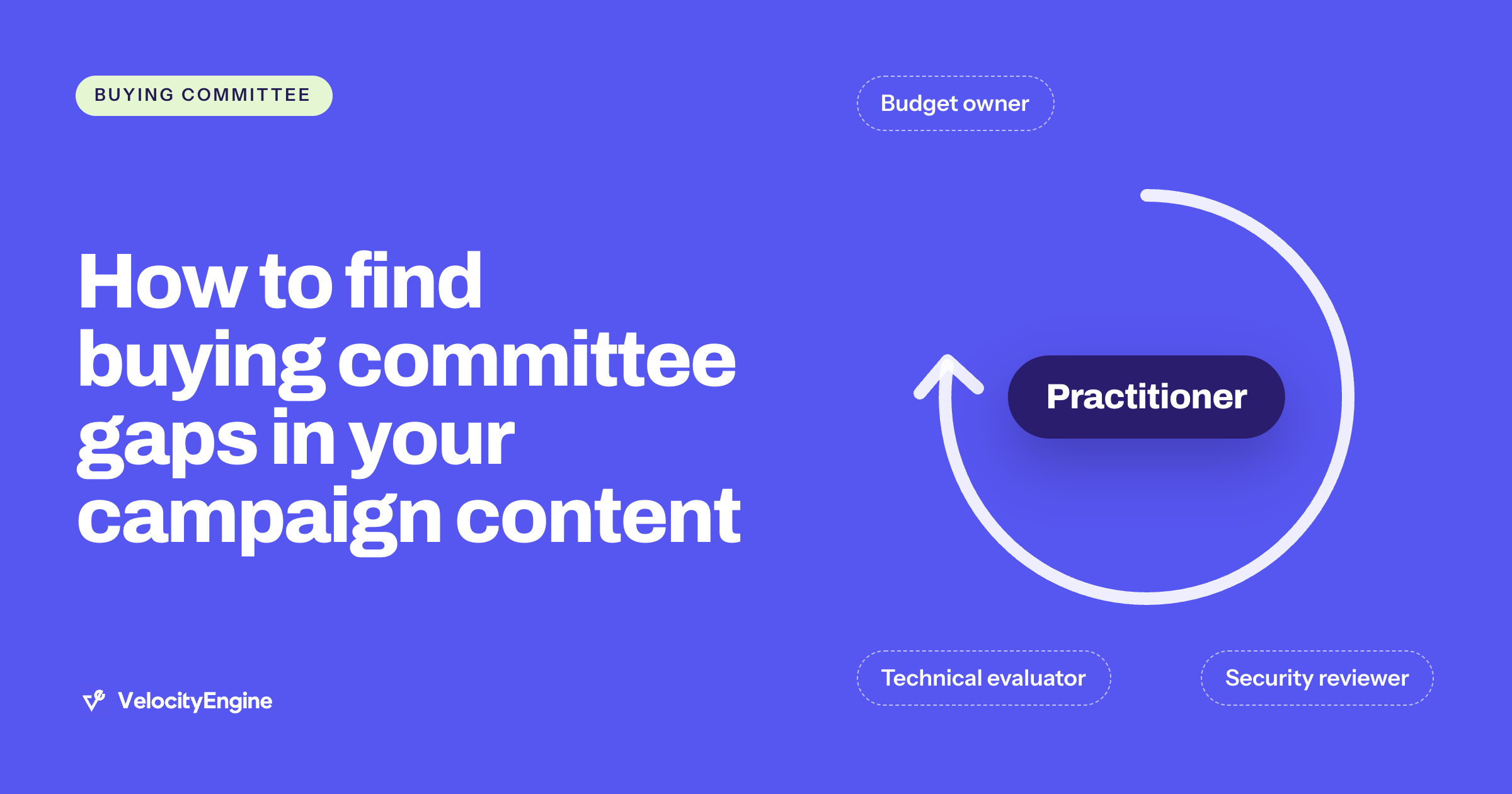
A campaign can perform well for one role and leave the rest of the buying committee with nothing.
Why do campaign assets keep reaching the same role?
Campaigns planned around one broad persona answer that persona's questions and nobody else's. When the next campaign is planned from the last one's top performers, the same role gets served again.
If you plan a campaign around a theme, a launch date, an audience tier, and an asset mix, that structure keeps the team coordinated. It can also fold the buying committee into one broad persona, such as the practitioner who downloads and registers.
Writing for one broad persona has a real upside: it's faster, and the messaging stays consistent. The cost is that roles with different questions get the same asset, and it answers none of them well.
Picture a campaign built around a new product capability. The team ships a launch blog, an ebook, and a webinar, all written for the practitioner who will use the feature. The VP who owns the budget and the operations lead who has to roll it out receive the same assets, framed around details they won't touch.
Next quarter, the ebook tops the report because practitioners engaged with it. So the next campaign gets another practitioner asset, and the loop closes.
Where do campaign content gaps usually sit?
Most gaps sit past awareness and education, at consideration and selection. That's where each role on the committee is weighing something different.
At awareness and education, the roles may still be agreeing on whether the problem is worth solving. By consideration and selection, their questions split apart.
Consideration is a stage demand gen campaigns aim to move accounts through, so it's a good place to check whether every role has something written for them. In a B2B software deal, for example, these roles ask different questions:
- Budget owner. Wants the cost, plus the assumptions behind any ROI figure, stated so a finance review would accept them.
- Technical evaluator. Wants implementation detail, integration requirements, and the operating constraints of running it.
- Security reviewer. Wants evidence that fits their review process, such as documentation and audit history.
If you sell professional services or work with agencies, use the roles in your own deals instead.
How do you audit a campaign for missing buying roles?
Map each asset from your last few campaigns to the one role and funnel stage it serves best. Then look for roles with nothing past awareness, and stages where every asset lands on the same person.
Run this before your next planning meeting, using the campaign assets you already have.
- List the roles. Write down every role that has to agree in a typical deal for the segment the campaign targets. Ask Sales which roles join calls later in a deal, because those roles may not show up in your form fills.
- Map your campaign assets. Place each asset from your last 2 or 3 campaigns in the one role (or persona) and funnel stage it serves best. Count it once, even when it could plausibly apply to several roles.
- Read the empty cells. Look for roles with nothing past awareness and education, and for stages where every asset lands on the same person.
- Brief against a gap. Build the next campaign for at least one role the map shows as empty, at the stage where that role makes its call.
Here's what the map looks like for the product-launch campaign described above:
| Role | Awareness and education | Consideration | Selection |
|---|---|---|---|
| Practitioner | Launch blog | Ebook, webinar | No assets |
| Budget owner | No assets | No assets | No assets |
| Technical evaluator | No assets | No assets | No assets |
| Security reviewer | No assets | No assets | No assets |
Three assets, one role. Every cell past the first row is a gap, and nothing in the campaign report would show it.
Counting once matters. If an asset counts everywhere it could apply, every role looks covered and the map stops telling you anything.
This costs you something. A campaign aimed at a budget owner or a security reviewer reaches a smaller audience than one aimed at practitioners, so its engagement numbers may come in lower. Agree with your leadership up front that this campaign is measured on whether the role was addressed. Doing the map by hand also takes time, and it goes stale as you publish.
Want the full framework? The free eBook The Coverage Gap shows how to find and size gaps across segments, buying committee roles, funnel stages, products, and channels, and how to keep them from drifting back open. Get the eBook.
Conclusion
A campaign that performs well for one role is doing its job. The trouble starts when the next campaign is planned only from that performance, because the report can only point you back at the role you already reach.
Mapping your campaign assets by role and stage shows you the rest of the committee in your target accounts, and which of them you haven't written for yet.
Content coverage is whether your content reaches the people who decide your deals, at the stage they're in.
When the same role keeps raising the same questions at selection, take note. It doesn't prove a content gap slowed the deal, but it tells you where to look first.
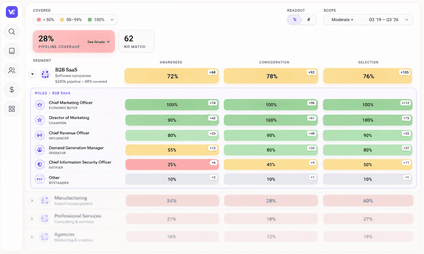
If you'd rather not build the map by hand, the Content Coverage Heatmap scores your content by segment, persona, and funnel stage, and shows where you're covered and where you're exposed. See your content coverage.
Frequently asked questions
How many past campaigns should I map?
Start with your last 2 or 3. That's enough to show whether planning from top performers keeps landing on the same role, and few enough to map by hand before your next planning meeting.
What is a buying committee content gap?
It's a role on the buying committee that has no content written for the questions it asks at a given funnel stage. Engagement reporting can't show it, because content that was never written produces no events.
Should every campaign target every buying role?
No. Aim each campaign at at least one role the map shows as empty, at the stage where that role decides. Expect lower engagement numbers, and agree up front to measure the campaign on whether the role was addressed.